Isiah Thomas is overrated

With the Last Dance covering the rivalry between the Pistons and Bulls and Isiah’s Dream Team snub, it has ignited an argument about his legacy.
Isiah is widely considered a top 30 player all time and one of the best PGs after Magic Johnson and Oscar Robertson, however the stats don’t back this up. They’re not just off, they’re way off. Isiah is only 151st all time in career win shares – behind guards like Sam Cassell, Derek Harper, Calvin Murphy, Hersey Hawkins, Andre Miller and others who it’d be considered insulting to put in the same conversation.
To begin with the positive, Isiah does have an illustrious passing career. He is 7th all time in assists per game and his 13.9 mark in 86 is the 3rd highest in history. He is one of 9 players in history to have 4 or more 10 assist seasons. During the title years the Pistons were the slowest paced team in the league which reduced his numbers to a still strong 8 or 9 per game. While overshadowed by other defensive stars on the Pistons during their best years he also averaged over 2 steals per game from 83 to 86.
Where Isiah’s case slides is his scoring. The most overrated type of scorer tends to be players who are inefficient, but who’s volume also isn’t overwhelming. The combination is the Bermuda Triangle of overrated scoring, the Rudy Gay and Andrew Wiggins zone. This is the issue with Isiah. His ranks in TS% and PPG from 83-90:
83 – 25 players over 20ppg: 21st TS%, 12th PPG
84 – 26 players over 20ppg: 24th TS%, 21st PPG
85 – 28 players over 20ppg: 25th TS%, 24th PPG
86 – 27 players over 20ppg: 17th TS%, 20th PPG
87 – 28 players over 20ppg: 25th TS%, 27th PPG
88 – 30 players over 19ppg: 27th TS%, 30th PPG
89 – 41 players over 18ppg: 36th TS%, 39th PPG
90 – 37 players over 18ppg: 37th TS%, 35th PPG
On five different occasions he ranked bottom 5 for both volume and TS% for his benchmark, including both title seasons. In comparison in 2019 the only players above 18ppg who ranked bottom 5 in volume and TS% were Wiggins and Tim Hardaway. No-one above 20ppg ranked bottom 5 in both, but C.J. McCollum was close at 5th from the bottom in volume and 6th in TS%.
The best modern comparison for Isiah’s stats is John Wall, another player who excelled at points and steals. From 2013 to 2016 he finished between 17.6 and 19.9 pts and between .510 and .524 TS%. In 2016 he was the least efficient scorer over 19 pts in the league and 2nd least in 2014. 2017 was his best year in volume and efficiency at 23.1ppg and .541 TS%.
Isiah vs Stockton is often framed as scoring vs playmaking, but Stockton had better scoring numbers in 89 and 90 than Isiah. Stockton averaged 17.1 pts and 17.2 pts in 89 and 90, but on elite efficiency of .624 TS% and .607. Isiah’s scoring is slightly higher at 18.2 pts and 18.4, but far less efficient at .528 and .501 TS%. It would be foolish to value the one higher point per game Isiah averages compared to the vast efficiency difference.
Or compare him to his teammate Joe Dumars, who had a good career as a scorer but most don’t consider him lights out compared to his defense. At 17.2 and 17.8 pts in 89 and 90 he’s only marginally behind Isiah, but more efficient at .571 and .555 TS% giving him a great argument for having a better scoring season. His career high scoring season (23.5ppg) is higher than Isiah’s and while Isiah is lauded for big playoff performances, in 89 and 90 Isiah had 5 30 point games to Dumars 4. Other than eye test reasons which don’t show itself in stats, much like Stockton there’s little reason to separate Isiah from Dumars as a scorer by more than a marginal amount.
Naturally however the league is full of players who’s impact wasn’t captured by their stats. You have to be there to know who they are emotionally – and everyone from the time seems convinced Isiah was a superstar. This is where MVP and All NBA voting can play an invaluable role. Take Dave Cowens, another 2 time champion from a decade earlier. At 125th in career win shares his numbers don’t back up his legacy either, but the respect for him as a supestar is shown in MVP voting when he beat prime Kareem in 1973 and finished 2nd two years later. Which brings us to the most confounding part of the Isiah puzzle – why did he receive no MVP or All NBA love in 89 and 90? He did well earlier in his career rating 1st team All-NBA from 84-86 and 5th, 8th and 9th in MVP voting for those years, albeit his career MVP shares of 89th is still far off consensus. In 89 and 90 however he only finishes 13th and 17th and doesn’t make any of the three All-NBA teams – Dumars even beating him in 1990. Traditionally any best player on the best team does well in MVP voting, even if non-superstars. For example in 2006 Billups finished 5th on the 64 W Pistons and 2nd in All-NBA, far ahead of Isiah for the 63 W team in 1989. Tony Parker finished 5th and 6th in 2012 and 2013 while having Tim Duncan looming over him in a way no star did over Isiah. Yet for such a supposed clearcut superstar, this credit never shined onto Isiah. It’s hard to believe there was a conspiracy against him as even if disliked, it hadn’t stopped ultra reviled players like Elvin Hayes and Rick Barry from finishing top 5 in similar situations (Although it may have blocked their win). Perhaps the more believable explanation is that PGs like Stockton, Kevin Johnson and Mark Price were seen as more productive players their teams needed more and therefore people voted that way.
Another difference between Isiah and a player like Cowens is the how they would be underrated by the numbers. Cowens biggest impact was on the defensive end which is already hard to track statistically, but moreso he did it as like Garnett and Draymond being the premiere switching big of his era which didn’t show up in the block category. Add in legendary intensity and it’s easy to see why Cowens impact was rated to have not shown up in stats. Since point guard is an offensive stat friendly position it’s hard to say where Isiah’s impact isn’t captured by his points, assists and steals.
It’s not too say Isiah isn’t a great player. He has one of the top 15 all time PG careers in history. Even if you put all of Magic Johnson, Oscar Robertson, Jerry West, Stephen Curry, John Stockton, Steve Nash, Chris Paul, Walt Frazier, Gary Payton, Jason Kidd and Bob Cousy above him, after that many of the most talented PGs like Penny Hardaway, Kevin Johnson and Mark Price had abbreviated careers due to injury. At best he could sneak into the top 10 of that group over players like Kidd and Cousy. However I refuse to rate him as one of the 3 or 4 best players of that group over players who dwarfed him in production and talent. The Pistons had great success but defense, rebounding and depth played key roles much like 2004 and 2005 version. All evidence point towards his contribution being closer to the Billups of his team than the Jordan.
Are Andrew Wiggins and Brandon Ingram’s starts for real?

The hopes for Wiggins career have been resurrected. Last season felt like the nail in the coffin for ever living up to his contract, putting up a woeful 18.1 pts, .493 TS%, 12.4 PER, .012 WS/48 and -2.9 BPM in his 5th season, which should have been a make or break year. This year he is at 25.9 pts, 22.2 PER, .563 TS%, .154 WS/48, 1.4 BPM.
Compared to last year, his ratio of FGA attempts per area (via basketball-reference):
2018-2019
At rim: 26.3%
3-10 ft: 14.6%
10-16 ft: 12.2%
16 ft-<3pt: 18.1%
3pt: 28.8%
2019-2020
At rim: 26.5%
3-10 ft: 21.7%
10-16 ft: 9.1%
16-23 ft: 11.3%
3pt: 31.3%
His eFGs from those areas:
2018-2019
At rim: .621
3-10 ft: .341
10-16 ft: .340
16-<3pt: .329
3pt: .339
2019-2020
At rim: .689
3-10 ft: .460
10-16 ft: .429
16-<3pt: .385
3pt: .361
He has increased his FTA rate from 4.1/game to 4.8, and FT% from .699 to .736. His rebounds at 5.1, assists at 3.6 and blocks at 1.1 are also career highs.
The biggest change in his shot selection is changing long 2s for 3s as seen by his 3pt attempts going from 4.8 to 6.5, and his % also increasing from 33.9% to 36.1%. He has also improved his efficiency from every area despite taking more FGAs overall at 20.9 instead of 16.6.
If Wiggins genuinely improved his shooting from midrange and 3, his %s from each area so far are not unsustainable compared to other wings around the league. However through his first 5 years he has not been a consistent shooter despite teams playing him for the shot, nor is his career 73.5% FT elite. His increase in FGA attempts does not show yet that he’s being more selective taking good shots. Therefore the most likely scenario is he hits a cold streak and his midrange falls under 40% and his 3pt falls under 35%. Still, if he continues to take 3s instead of long 2s and passes the ball better he can have a better season than he did last year. And if he continues to be an over 35% 3pt shooter and over 40% midrange shooter, he could legitimately stick at all-star level, even if it’s a DeMar Derozan type of all-star that doesn’t hold up as well to analytics.
Brandon Ingram is putting up 25.9 pts, .633 TS%, .153 WS/48, 2.8 BPM, a major breakout from his season last year. His ratio of shots per area in each season:
2018-2019
At rim: 34.0%
3-10 ft: 18.5%
10-16 ft: 20.4%
16-23 ft: 14.1%
16-<3pt: 12.9%
3pt: 12.6%
2019-2020
At rim: 21.0%
3-10 ft: 20.4%
10-16 ft: 17.3%
16-23 ft: 11.1%
3pt: 30.2%
His eFG in each area:
2018-2019
At rim: .681
3-10 ft: .437
10-16 ft: .389
16 ft<3p: .437
3pt: .330
2019-2020
At rim: .647
3-10 ft: .515
10-16 ft: .607
16 ft<3p: .444
3pt: .469
Ingram averaged 5.6 FTA/game in both seasons, hitting .675 last year and .720 this year. His rebounds at 7.3 and assists at 3.9 are both career highs.
Of the two players, Ingram’s is the one that looks most unsustainable. He is driving to the basket less than he did last season, but making up for it with massive jumps in both %s and attempts (1.8 a game to 5.4) from 3 and also hitting an unsustainable number from 3-10 and 10-16 ft. Like Wiggins, improvement as a shooter is plausible and Ingram has the type of long body to get his shot off from midrange, but at a career 66% FT shooter and yet to average more than 0.7 makes a game from 3 so far in his career (averaging 2.6 this year) until proven otherwise his shooting appears too big a leap to trust for Ingram. With that said Ingram is averaging Durant like scoring numbers per minute (29 pts per 36, .633 TS%) so nobody is expecting him to keep up those numbers, and he could have his obvious regression and still end up having an all-star breakout season like D’Angelo Russell last year. He’s also been in the league for less time making genuine improvements more plausible.
The Lakers must think like a small market team with big market advantages

The Lakers catastrophic season can be blamed on many things. Foregoing the strategy that’s always worked for Lebron of surrounding him with shooters to instead have ball handling non shooters was disastrous. They didn’t see the disconnect between Lebron and young players coming when they signed many chemistry squeaky wheels like Rajon Rondo, Lance Stephenson and Michael Beasley.
However where it started going wrong was Paul George signing in Oklahoma City. The Lakers risked one of their top prospects in D’Angelo Russell to get cap space for a second player only to end up spending it on pointless one year deals while Russell made the all-star team. That George to LA wasn’t in the bag clearly stunned the team and they struggled to have a Plan B to contend in Lebron’s first year with the team. Their backup plan ended up being to double down on their original plan by signing one year deals and waiting for that star free agent in 2020. This also led to the loss of Julius Randle who they didn’t want to give a 2nd year player option to.
In other words they put all their chips into the free agent strategy. This is before considering that Magic Johnson’s strengths are connecting with players rather than being ahead of the game analytically, and they have paid dearly for Magic’s weaknesses to get to those strengths. There’s nothing wrong with the Lakers leaning into their strengths as a franchise which is legendary history, star recruiters like Magic and Kobe and being the city many players go to in the offseason. The problem is that advantage goes away if they sacrifice prospects like Russell, Randle or Ivica Zubac or fall behind in the analytics department to get there. It’s giving an advantage to the small market teams right back.
What would make the Lakers unstoppable is if they took all the strengths of a small market team like Milwaukee and added it to their natural location advantage. This is how their cross sport twin the Yankees adjusted. Instead of floundering with overpaid contracts while analytics driven small market teams ran circles around them, they decided to build up one of the best prospect pools in the league themselves and use their money to buy international prospects. Now that the Yankees have both great homegrown prospects and a money advantage it will be difficult for the smaller market teams to keep up with them or the Red Sox who have succeeded for the same reasons. Likewise if the Lakers got smart and cared as deeply about analytics, long term controlled prospects and finding free agent bargains as the teams with less location strengths as them they would have an advantage without giving any edge back. They could have planned to add Lebron without risking players like Russell and Randle to do it, but it’s when they started risking their future on the hubris that multiple all stars would want to come there that it blew up in their face.
The Raptors loaded up on mildly intriguing prospects and let the odds play in their favor
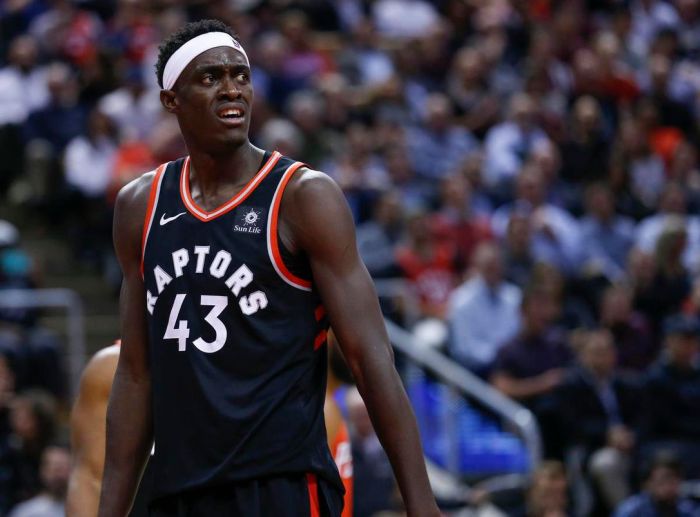
Pascal Siakam’s improved play for the Raptors this year is a game changer going forward. At 16.8 pts, 6.9 rebs, 3.1 ast on .625 TS% he has played near all-star level and the best part is the room to get better. He only averages 32.2 minutes and has yet to add the midrange game to his arsenal with only 40 attempts from 10-16 feet and 15 attempts from 16-23 feet this season. At 67 for 188 from 3 (35.6%) he’s also just emerging as a 3pt shooter. It’s easy to see how with more minutes, a willingness to take the midrange shot to keep the defense honest and improving his 3pt stroke how he could make the leap to 20 points per game, especially if the team lost Kawhi Leonard. His elite mobility is also ideal defensively for a power forward for this era and it’s unclear if he’s reached his upside in that area yet. At best Siakam could be the combination of spacing and defense every team wants from a power forward right now while also scoring at an all-star level.
Surely even the Raptors would tell you he didn’t expect to land a potential all-star with the 27th pick. But they didn’t get here by luck either. The last few years the Raptors roster could be divided into established veterans like Kyle Lowry, DeMar Derozan, C.J. Miles, Serge Ibaka, Jonas Valanciunas and two seasons ago DeMarre Carroll and Cory Joseph, and rookie scale prospects making up the “bench mob” in Fred VanVleet, Delon Wright, Norman Powell, O.G. Anunoby, Bruno Caboclo, Jakob Poeltl, Bebe Nogueira, along with Siakam. Traditional over 50 win teams with finals aspirations rely on veterans for the bottom half of the roster, but Masai Ujiri put his trust entirely on prospects. This acted as a farm system for the veterans who would one day need to be replaced for luxury tax reasons. When they had to trade Cory Joseph’s contract, their backup PG play only improved with the VanVleet and Wright combination. Likewise they had no drop-off when dumping Carroll for rookie Anunoby. If Poeltl had stayed he would have one day replaced Valanciunas.
The outcomes of these prospects however has been as unpredictable as usual. Caboclo never became the player Masai Ujiri envisioned while in Toronto and is only now showing signs in Memphis, and Nogueira is back in Europe. Powell flashed signs of greatness, but his shooting regressed and now his 4 years, 44 million extension is a negative value contract. Wright who is a month from his 27th birthday is running out of time to be more than a solid bench guard. VanVleet has emerged as a huge part of the Raptors playoff chances but has been banged up so much for his generous six feet that he may be best sticking to a sub 30 minute role in his career. Poeltl and Anunoby are too young to judge yet, but Poeltl’s production has fallen behind the big picked after him Domantas Sabonis and Anunoby is working his way through a sophomore slump. In this context it’s not that the Raptors talent evaluation is perfect, it’s that they gave themselves so many shots with the hope one or two went in, which is precisely what happened with the success of Siakam and VanVleet. None of these prospects had the statistical odds of becoming an all-star that a top 5 pick does, but the combined odds of one breaking out were much friendlier.
With that said, filling half a team with credible mid to lower level prospects is easier said than done. In some ways Ujiri repeatedly hitting these singles and doubles in the draft took more skill than just taking one home run lottery pick. Another key move for Ujiri is putting Poeltl in the Kawhi trade instead of Siakam. While moving Ibaka to center made it logical to trade him, Poeltl was the younger prospect with top ten pick pedigree making it a harder decision. If they had believed Poeltl was the potential all-star instead of Siakam he would likely be the one still on the team.
Having a young all-star talent not only makes the Raptors more appealing to Kawhi than just playing with an aging Lowry, but it gives them a future if he leaves. Without Kawhi, if they keep everyone the hope would be Siakam becomes the new Kawhi and a prospect like Anunoby becomes the new Siakam. While Siakam’s improvement was near impossible to predict, by loading up on credible mid level prospects they were able to turn probability to their side as they only needed the best of the group to come out as a gem.
Should MLB games be 7 innings long?

Despite a dream matchup of Boston vs LA the World Series ratings were down 25% from last year. While local ratings remain strong it’s the latest warning sign for the MLB’s long term viewing future that the national engagement with the sports and its stars is waning. It’s better to act before the floor falls out than after.
Baseball has a length problem. Not only does the season run 6 days a week but the games clock in at 3 hours, 5 minutes on average. To watch all your team’s games requires a commitment of 18-20 hours a week compared to 6-8 to a sport like the NBA or 3 for the NFL, and times have changed. It’s not just competing with other sports or other TV shows for that attention, but competing with Netflix, Facebook, Instagram, Twitter, apps, etc. Even if someone finds the time to watch all of their own team’s games, are they turning into Mike Trout’s Angels game after it ends? In the NFL everyone watches the Sunday night and Monday games even when it doesn’t contain their team. Likewise in the NBA people are interested in seeing league wide storylines like Lebron on the Lakers or the Warriors. This is where the MLB appears to be losing the most ground and it’s a numbers problem. More time watching local teams means less time available to watch anyone else’s.
Reducing the games played in the season would be ideal, but would be near impossible to get owners to agree. A 110 game season would be mean 26 less home games of revenue, and 52 less games on television for each team.
My proposal while radical would be a softer landing: 7 inning games, which would take down the average to about 2 hours 20 minutes. If people miss that extra 45 minutes of baseball a day, they can use it engaging in other team’s games or highlights which is precisely what the MLB needs. At the gate the same price can be charged for 7 inning games as 9, if anything it’s easier for people to fit shorter games in their schedule. Television loses 45 minutes of airtime a game, but perhaps the stations can just play other baseball games. The MLB could also add more games to the schedule as double headers.
The arguments against it would be:
- Baseball is a 9 inning game, at 7 innings it’s no longer baseball: While the purists would be upset, there’s no easy solution here if the MLB wants to be relevant a generation from now.
- Statistical history becomes meaningless: Like the first it hurts purists, but there would be a division between the old era and the new era statistically. The PED asteriks have also tainted the record books already.
- Pitchers lose their jobs as the worst starters and relievers are weeded out: Making the player’s association agree to this would admittedly be one of the biggest obstacles, although it leaves more revenue for everyone else.
- The relationship of starting and relief pitchers changes: Starters would not go as long, but with a regular 4 or 5 innings they’re still more important than relievers. They would also be available to pitch in more games and would have the star showcase of more complete games and more no hitters. If the MLB doesn’t want teams like Oakland to go “all reliever” and eliminate the starting pitcher, reducing the amount of pitchers teams legally carry on a roster would make it no easier than it is now to use the strategy.
- Low scoring games: In addition to shorter games, pitchers are well rested, batters see them less and the worst starters and relievers are eliminated, all of which leads to less runs. The other way to see it however is every scoring opportunity they do get is heightened in importance, every home run makes a bigger splash league wide. A tie game in the 5th inning with men on base feels quite different in a 7 inning game with relievers waiting to finish it out than it does now. The drama could increase and a single player can be the hero of a game more often. The relationship between how high scoring a sport is and popularity is overall mixed. The most popular sport in the world soccer regularly has 1-0 or 2-1 scores.
- It doesn’t change the real problem, the game is too slow: I’d point towards the popularity of football and soccer as examples how “slow” games can be popular. In football there’s so much time with the game stopped between plays, challenges, timeouts, commercials, etc. that it makes the speed between pitches in baseball seem rapid in comparison. The difference is that every football play is more meaningful than every pitch largely due to the season being ten times as short. Likewise in soccer a lot of time is spent passing the ball around the middle of the field but it hasn’t reduced its popularity. Finally I would point out that for most of the 20th century baseball’s pace didn’t stop it from being popular.
- Is 7 innings enough of a difference? Or should they just go all the way with a draconian 6 inning games? Instead of games being merely as long as NBA and NHL games, being even shorter at 2 hours would make up for playing twice as long a season. On the flip side it pushes starting/relief pitcher strategy closer to the tipping point of no longer being the current game, and this idea is crazy enough anyways that I figured 7 is a compromise for the current fanbase and player’s association.
There’s a lot of risk going to 7 innings of a currently profitable league and the people who love the current league would be unhappy. But without a major change there’s a serious danger of the MLB being horse racing or boxing a generation from now as “your father’s sport” and minor tweaks to the speed of the game aren’t moving the needle. The real difference between baseball and the other sports is being 162 3 hour games a year. Either the length of the season or the length of games may have to be sacrificed.
Ersan Ilyasova, the NBA’s most valuable journeyman
 Every few seasons a team adds Ersan Ilyasova and they take off. First there was the “Fear the Deer” Bucks who rode Andrew Bogut and Scott Skiles to an elite defense while moving the ball for open 3s on offense. A few years later they made another playoff run repeating the formula with Larry Sanders as the defensive center beside Ilyasova. There were some lean years including an Orlando stint that didn’t work and forgettable stints contributing to the first half of a Pistons playoff season and second half of a Hawks one, before becoming a huge mid season pick-up for the 76ers last season as he and Marco Belinelli gave them the shooting they desperately needed. Now he’s contributing to the Bucks 7-0 start as having shooting bigs in him and Brook Lopez are a vital addition for Mike Budenholzer’s spacing system around Giannis.
It’s no secret why he helps teams. The floor spacing he brings at PF fits all-star players who lack range such as Bogut, Sanders, Andre Drummond, Ben Simmons and Joel Embiid, Giannis Antetokounmpo. Most of these teams had talent, but just needed that extra spot up shooting to take their ball movement to the next level. The Ilyasova spacing lineups acts as something of a final piece to make their team work.
In spite of this since leaving Milwaukee originally in 2015 he’s been the definition of a journeyman, yet to play a full season with any team since then. He’s spent the bulk of his career making mid-level contracts, signing 5 years 40 million in 2012 and then a 3 year, 21 million deal this summer. When the Sixers signed him last year his stock had declined so much that he was a mid season free agent after being waived by the Hawks. It’s not totally unfounded. He is a mediocre rebounder for a big and average defender and at a career 36.6% 3pt is a good shooter but not lights out. In the wrong situation like Orlando he misses enough shots and hurts his team enough defensively and on the glass that teams decide he’s not worth it. Then he bounces around, becomes available for cheap until finding another team that needs a floor spacing power forward to go to the next level.
There won’t be a statue built of Ersan Ilyasova in any NBA city, but in his stints in Philadelphia and return Milwaukee he’s once again proving despite his journeyman status he can shift the tide of a team’s season.
The Thunder must consider trading Russell Westbrook
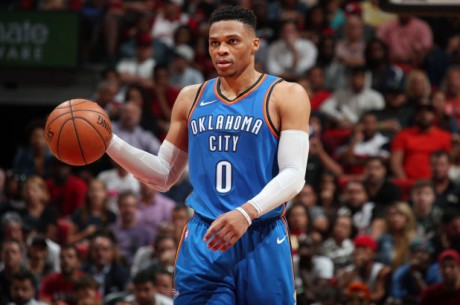
It’s too soon to panic over the Thunder’s 0-4 start but the time is coming, or should have come already to consider Russell Westbrook’s long term future on the team. Westbrook turns 30 on November 12th and starting this year his next five seasons he is owed: $35,654,150 (age 30), $38,178,000 (age 31), $41,006,000 (age 32) , $43,848,000 (age 33), $46,662,000 (player option, age 34). He has had several knee surgeries or injections in his career after a meniscus tear that cost him the 2013 playoffs and due to related arthroscopic surgery 28 games during the Kevin Durant 2014 MVP season. This was followed by several durable seasons until a PRP injection this summer. Westbrook’s style of play depends on his unstoppable explosiveness and his ability to contort his body finishing at the rim and skying for rebounds, areas of his game most vulnerable to diminish with athletic decline. To his credit all signs are Westbrook’s physical conditioning routine off the court is phenomenal and has even benefitted teammates crossing his path like Victor Oladipo, and immense dedication to their bodies has helped stars like Lebron James and Kobe Bryant extend their primes to amazing lengths. On the other hand Westbrook has played his whole career like it’s the NBA Finals and no doubt pushes his body to extreme lengths off the court and one has to wonder if this punishment will have some cost down the line.
The risk is clear. By holding onto him deep into his contract, Westbrook may physically decline until his supermax either becomes an albatross or loses most of his current trade value. The upside is hoping for a 2011 Mavericks run, a team who held onto their superstar when some may have already cashed out on his value and had the stars align in his 13th season. However Dirk Nowitzki’s game was built on size and skill, not athleticism making him a tremendous fit for longevity if anyone has been. Furthermore the Mavericks had won 55 games in 2010 leading up to their title year and a few years earlier had shown a formula for contending with a Finals loss in 2006 and 67 wins in 2007 despite no clear second star better than Jason Terry or Josh Howard.
Sam Presti pulled a rabbit out of his hat at the time with the Paul George trade after Westbrook’s MVP season, but with 48 wins and a 6 game playoff loss to the Jazz they only improved by one regular season and playoff win compared to the year before. The loss of Andre Roberson continues to be felt and no doubt they won’t judge this season until he returns, but when Roberson played his last game for the Thunder they were sitting in 5th for the West last season, and their record with him playing was 24-19 for a 50 W pace, a marginal improvement. Roberson’s lack of shooting most likely would have been the target of defenses in the playoffs such as the Jazz which the Thunder had issues solving anyways. With the highest payroll in the league and owing 2020 and 2022 future 1sts to the Magic and Hawks one has to ask where they go from here in terms of assets to improve the team, and whether the George trade was already the equivalent of the Tyson Chandler pick-up for the Mavericks to take them to the next level if it was going to happen.
An MVP caliber player is a virtual necessity to win a title and based on that alone the Thunder could choose to push the Westbrook era as far as it’ll go. It’s unclear when they’ll have another chance at a talent this special. On the other hand with his style of play and starting a 5 years, 205 million contract, the Thunder must seriously consider whether 30 is the right age to move on from Westbrook’s salary while they can and replenish their assets.
2018 NBA Draft Top 20 prospects
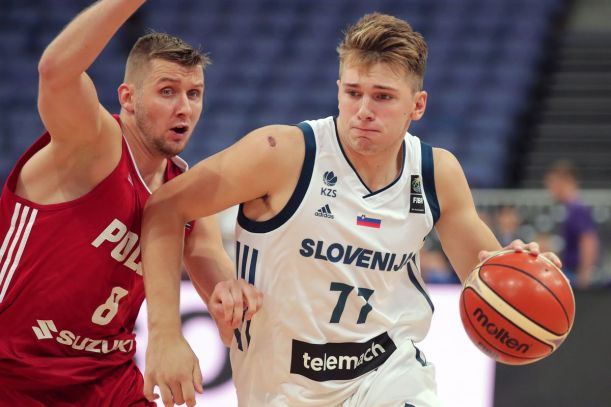
1. PG/SG Luka Doncic – Saying the numbers add up for Doncic is an understatement. He averaged 24.7 pts, 7.5 reb, 6.6 ast, 1.7 stl per 40 in the Euroleague as a teenager. Even at lower levels like ACB, French Pro A and Adriatic, teenagers per minute stats end up translating to their future NBA careers well, as development makes up for the jump in competition. To not be an all-star (say Gordon Hayward level) Doncic’s stats would have to translate significantly worse than the virtually his peers from this age, despite playing at a higher competition than him. A player already at this high a level playing professional basketball and at a much higher level than the NCAA is about a guarantee to get an all-star as you’re going to get. And if you’re picking a guy to become one of the all time greats, being a once a lifetime European performer at his age seems like one of the best paths there. The precedent for being a star with his style of play is there with stars like Harden, Manu, Roy or even Magic. Even on the defensive end Doncic is appealing, as in the modern game 6’8-6’9 players who can switch onto both smaller perimeter players and bigs is what everyone is looking for.
2. PG/SG Elie Okobo – Okobo is not Doncic but I’ll take him over an imperfect NCAA pool. He averages 20.8 pts, 7.2 ast, 4.1 reb, 1.4 stl per 40 on .628 TS% in French Pro A and his shooting spot of 41.8% 3P on 7.4 3PA/40 and 83.5% from the FT line is superb. Like Doncic he’s doing this at a higher level than college basketball and already used to a professional lifestyle. With size at 6’3 to shoot over opponents his ability to score 3s off the dribble has a chance to be a powerful weapon in the league in the era of Curry, Harden, Lillard, Kyrie, etc. have dominated with it, and he has the wingspan (6’8) to defend. Projected as a fringe top 20 pick he’s not too far off the map for traditional scouts. The one downside is he is 21 in October, he would be an even better prospect if he was dominating as a teen like Doncic.
3. PG/SG Trae Young – Young is definitely volatile. He put up an astonishing 30.9 pts, 9.8 ast per 40 on .585 TS% and solid 1.9 stl/40, but also 5.9 TOV/40 which is a rare number, but possibly acceptable with how high his volume is. His shot fell apart in the 2nd half of the season but his 36% 3pt on 11.6 3PA/40 and 86.1% FT is nonetheless a superb combination of 3P%, volume and FT that projects him as an elite shooter. At 6’1 he lacks the size of players like Curry, Lillard and Kyrie. Nevertheless those players still set a precedent for how powerful Young’s shooting and handling skill can be if it translates, and one of those players in Curry is one of the best offensive players of all time. It’s a risk but drafting a franchise player like Curry is the real goal and I still think everything going right for Young gives him the best path there of NCAA players to be not just an all-star, but a true franchise changer. He is not Jimmer Fredette. Jimmer played 4 years in college and only dominated in his 3rd and 4th years when was older than everyone (his freshman scoring of 15.1 pts/40 as a freshman and 19.7 as a sophomore is meek compared to freshman Young) and he never had half of Young’s passing numbers.
4. C Jaren Jackson, Jr. – Numbers are critical for big men’s success in NCAA and internationally and Jackson has them. Any source that treats Ayton or Bagley as more productive than Jackson are looking too much at minutes and points – Jackson has the higher WS/48 and BPM. He averages 20 pts, 11.6 reb, 2.0 ast, 5.5 blk, 1.1 stl on .647 TS% and his 15.4 BPM is stellar for the class. He fits the modern game well as shooting 39.6% from 3 and 79.7% FT and is a great athlete defensively as much as offensively. I only have one catch – the superstar centres tend to be no brainers even at a greater level than Jackson. Davis, Embiid, Cousins (sanity aside), Oden (likely superstar if healthy) were like Jackson and Ayton combined in terms of having the tools and the production on both ends in college. Going back in history the same has been true of most of the all time greats like Shaq, Hakeem, Kareem, etc. Towns is one of the most promising comparisons for Jackson as his lower minute college career has a lot of similarities, but Towns has a lot to prove in his career still outside of putting up points. Anything less than the total deluxe package in college creates skepticism if looking for a true, MVP caliber big man. But asking for an outcome that high is picking nits at this point if they could go onto be all-stars on the next level and he could break the mold.
5. C Wendell Carter, Jr. – On paper I slightly prefer Carter’s stats to Jackson’s. With a statline of 20.2 pts, 13.5 reb, 3.0 ast, 3.1 blk, 1.2 stl per 40 on .628 TS%, the biggest difference is he blocks less shots but passes more. I’d take the assists and what it says about basketball IQ, while in the past some fraud prospects have blocked shots in college by being longer than everyone else but nothing else. However from a talent perspective Carter passes the eye test less compared to Jackson’s elite athleticism and switchability. I agree with the Horford comparison most people seem to have for Carter with the ability to shoot, pass and defend. There’s some Jokic there as well. Like Jackson the reservation is there that anything less than perfect big men prospects in NCAA are a longshot to become a superstar.
6. SG/SF Josh Okogie – Long armed, versatile players have had success at the wings in this era such as Durant, Giannis, Kawhi, Butler, George, Iguodala, Deng, and now Tatum. Okogie has a 7 foot wingspan, is athletic, is known as having the it factor in terms of defensive hunger and intangibles and is only 19. Per 40 he averaged 20 pts, 6.9 reb, 2.7 ast, 1.9 stl, 1.1 blk, showing contrary to his reputation as a defense only role player he showed the ability to be a volume scorer and passer. He shot 38% from 3 and 82.1% from the FT line projecting him in another key skill on offense. The only thing preventing me from calling him the best NCAA prospect in the class is despite mistakes that are made every draft, it’s still only once a blue moon for NCAA prospects all-stars are taken out of the top 20, and never MVP caliber players. For that reason I give an edge to Young, Jackson and Carter for likelihood to be a star.
7. SG/SF Dzanen Musa – Musa is probably the best player on his Adriatic team. He averaged 21.1 pts, 5.6 reb, 2.7 ast, 1.8 stl per 40, leads them in PER and while his shooting of 31.5% 3pt is average, it’s on a quality volume of 6.2 3PA/40 and 82.2% FT which projects him as good NBA shooter. His shooting splits are overall very similar to Doncic. Musa is also even younger than Doncic, having just turned 19 in May. His standout performance on his European team, a much higher level than college basketball and among grown professionals is highly impressive and his size and skills is enough to give him upside. He is not known for defense but his solid steal rate and 6’8 size could give him switchable potential.
8. SG/SF Mikal Bridges – Like Okogie Bridges has a lot of the elements of successful wings. He’s long, is versatile (22.0 pts, 6.6 reb, 2.4 ast, 1.9 stl per 40) and has a superb shooting split of 43.5% 3P and 85.1% FT. He however started slower as a scorer than Okogie only scoring 12.5 and 13.1 pts per 40 as a scorer his freshman and sophomore years and turning 22 in August the history of older prospects who became stars is limited. Nevertheless a lot of the elements of great two way 3 and D players at his position is there.
9. SF/PF Miles Bridges – Bridges is almost one of the best prospects in the class. With underrated scoring numbers (21.8 pts per 40), solid rebounding and passing (8.9 reb and 3.4 ast) and 36.4% 3P on 85.3% FT, like Okogie he passes a lot of the checkmarks of the long armed versatile wing following in the Kawhi and Butler path. Unfortunately his defense looks to be overrated both by people who’ve watched him closest, and his defensive stats of only 0.8 stl/40 and 1.0 blk/40. Furthermore in modern game favouring smallball, it’s a good role to expect the SF/PF tweeners to play PF. It would be great if Bridges ended up a versatile 3/4 player who defends, passes and shoots 3s, the wing this draft is missing. But the more I looked at his stats the more it looks like he’ll be closer to the shoot-first SF/PF tweener like Jeff Green, Michael Beasley, Harrison Barnes. Nevertheless the upside if the former clicks in is still worth believing in, and the latter could lead to a long career anyways.
10. PG/SG Shai Gilgeous-Alexander – SGA’s stats are solid (17.1 pts, 6.1 ast, 4.9 reb, 2.0 stl, 0.6 blk per 40) .578 TS%), shot 40.4% from 3 on a small sample size on 57 attempts and shot 81.7% FT and has strong size for a point guard which gives him a lot of defensive potential, an intriguing combination with his shooting, defense and passing. Turning 20 he is a year older than some peers in his class but young enough to have a lot of potential. There’s few clearcut holes in his profile, but most all-stars in the past have stood out in some way like shooting, athleticism or even better stats. Nevertheless being a complete prospect across the board is enough to be appealing and gives him starter to all-star potential.
11. SG Lonnie Walker – Walker is one of those eye test champion, stats are out (16.6 pts, 3.7 reb, 2.7 ast, 1.4 stl per 40, only .527 TS%) guys who have a high chance of being a low IQ bust. So what is he doing 11th on a list favoring numbers? He is explosive as hell slashing to the rim and from time to time great NBA guards ,more-so than big men go from raw projects to successful careers. Mainly, the shadow of Russell Westbrook hangs over things here for me. As long as an MVP guard only put up the stats Russ did in college, freak athlete prospects have to be accounted for. DeMar Derozan is also a successful all-star who started slowly, and recently Jaylen Brown’s college stats suggested bust is showing a lot of all-star signs.
12. SF/PF Michael Porter – Porter has a complete lack of statistical resume not to mention health concerns that could lead him to redshirt his first year. Out of all these guys he has the biggest risk of falling out of the league by the end of his rookie contract and scoring less than a few hundred points in his career, and it’s not close. Not only could health totally take out his career, but he could be 100% healthy and still be the biggest bust here just based on total lack of track record of proving he’s good. However he did have special fluidity and shooting for his height in high school, and high variance means high chance of busting, but also higher chance of being a bust than players who’s stats they’re not likely to be stars. Considering where I just rated Lonnie Walker, Porter’s boom/bust potential can’t be too far behind.
13. PF/C Marvin Bagley – Bagley was great in some ways in college (24.9 pts, 13.1 reb per 40) and disappointing in others (1.0 stl, 1.0 blk, 1.8 ast per 40). His defensive IQ appears to be mediocre to go along with his steal and block stats. Even if he puts up offensive stats, there’s concerns about where a big who scores at the rim and struggles on defense fits in the modern game. He is a tremendous athlete, appears to have great intangibles and is only 19. Athleticism has had some success at PF in players like Blake, Bosh, Davis although most had better college stat predictors than Bagley. I’m not sure I believe in his shooting as his 39.7% 3pt was only on 58 attempts and he shot 62.7% from the FT line. I have a lot of issues with Bagley that makes it so I wouldn’t be shocked if he busts, but at 13th and with his talent, age and effort level, there is potential for an all-star big.
14. C Mo Bamba – Bamba’s stats are pretty average outside of shotblocking (17.1 pts, 14.0 reb, 0.7 ast, 1.0 stalk, 4.9 blk, .593 TS%) and isn’t much of a shooter (27.5% 3pt, 68.1% FT) which is a problem since virtually all the great centers had more complete statlines in college. The model is Drummond and Deandre for Bamba who were athletic projects that went on to very nice, but ultimately not franchise changing careers. He also appears to pass the talent eye test in spades, has high intangibles and apparently is shooting well in workouts giving him 3 and D big man potential.
15. C Deandre Ayton – The #1 pick has a lot of red flags. The scoring and rebounding is tremendous (24.0 pts, 13.8 reb per 40, .65 TS%) but the defense (0.7 stl, 2.3 blk and all visual evidence) is not, and passing is ok (1.9 ast per 40). To put it in perspective Ayton put up 0.6 stl, 2.3 blk per 40, Meyers “softest big of this generation” Leonard had 0.7 stl and 2.4 blks per 40 in college. Being a statistically flawed center, especially on defense is not where you want to be with the two way track record of successful NBA centers in the NCAA. Projecting him at power forward is more promising where his block numbers are not as damning and he played beside a center in college, but it’s still not ideal. Ayton is also turning 20 in July and year older than players like Bagley. Ayton dominated as a scorer in volume and efficiency, but scoring because you’re bigger than everyone is one of the biggest things to look out for meaningless high school or college, and concerns about basketball IQ and motor are two of the next biggest ones. With all that said, combination of physical talent and skill is insane and at 34.3% 3pt (only 35 attempts) and 73.3% FT he has a chance to shoot. Even without the skill, he would have a potential to be one Drummond or Deandre on physical tools alone.
16. PF/C Bonzie Colson – Colson isn’t on much draft boards as he’s an old, severely undersized big man with a foot injury. However he reportedly has a 7 foot wingspan and he has outstanding stats – 24.4 pts, 12.5 reb, 2.8 blk, 2.1 stl, 1.1 ast per 40, .569 TS%. While he only shot 29.3% from 3, he shot 76.1% FT, which with his 44.3% 3pt mark as a junior suggest some outside potential. Furthermore steals like Draymond and Millsap suggest there’s a path for a short big if they have the productivity, strength and intangibles.
17. SG Grayson Allen – Allen can shoot (37.0% 3pt, 85% FT) and has solid passing numbers (5.2 ast per 40) and steals (1.9 per 40) both of which are good indicators. He actually scored more points per 40 as a freshman (19) than senior (17.4) which one hand is concerning that he couldn’t dominate as an older prospect, but it also shows Allen wasn’t just a player that dominated when he got older than everyone. His draft stock was higher in his early years than later. The biggest catch is Allen is 23 later this year which the track record is limited, but the shooting, passing and athleticism is appealing.
18. C Robert Williams – Williams case is a poor man’s version of Bamba’s except he’s older, slightly worse (16.2 pt, 14.4 reb 2.2 ast, 4.1 blk, 1.2 stl, .614 TS%) and his 47.1% FT suggests he’s almost certainly not going to shoot in the NBA. Nevertheless he has a model in Drummond and Deandre style all-stars, protect the basket, rebound and finish at the basket.
19. SG Zhaire Smith – Smith is an elite athlete with better stats than Walker (15.9 pts, 2.5 ast, 7.0 reb, 1.6 stl, 1.6 blk per 40, .618 TS%) and the Westbrook/Derozan rule applies to him. So why is he lower? He looks to have more trouble using that athleticism and at risk of being in the Ben McLemore, Terrence Ross camp of athletic swings who’s ball handling keeps them taking spot up shots on the outside. He shot 45.0% from 3 but on only 40 attempts and 71.7% from the FT line. Nevertheless youth, athleticism and shooting and the potential for young perimeter players to exceed their college stats puts him here.
20. PG Jevon Carter – Carter has impressive stats (20 pts, 7.7 ast, 5.4 reb, 3.5 stl, 0.4 blk), is a good shooter at 39.3% 3pt and 85.8% FT and is known as a great intangibles, tough defensively prospect that is common for a 2nd round steal to make his way in the league. The precedent for old PGs becoming all-stars is small in the last decade and he is turning 23 later this year, so the target here is probably a Patrick Beverley type impact in the league.
Could the Lakers get both Lebron James and Kevin Love?

The Lakers have been long been rumoured as a Lebron destination. I’ve always taken it with a grain of salt. Remember when Kevin Love was supposed to be obsessed with playing with the Lakers, then laughed it off and resigned with the Cavs? How about DeMar Derozan returning home? The Lakers have a lot of fans, so writing about them conquering all in free agency is a good way to get page views.

The biggest obstacle is getting enough talent. Sure Paul George wants to play there, but is that and kids enough to beat the Warriors? They could use a 3rd all-star. What if he’s on the Cavs, available for a trade in the case of Lebron leaving, and happens to be an L.A. native?
Let’s say the Lakers signed George and got both Lebron and Kevin Love, either in a large S&T or in separate deals. Their starting lineup could be Lonzo Ball, Brandon Ingram, Paul George, Lebron and Love. Not bad. It’s taking the Lebron and Love combination which was enough to win the East this year without a lot of help and greatly improves their perimeter in a matchup with GSW. Unlike the Cavs perimeter, the combination of Ball, Ingram and George is perfect to defend the Warriors by switching everything to cover their shooters much like the Rockets did in the conference finals. Ingram and George are two of the longest wings in the league and Ball is a 6’6 PG who shined on the defensive end this year. Unlike the last two finals where the Cavs had no answer for Durant 1 on 1, George is one of the best fits in the league physically to defend him.
Offensively the combination of Lebron and Love’s floor spacing and post play remains lethal. The Lakers could even resign old friend Channing Frye to play the same spacing role he did in Cleveland. George gives them a 20 point creator on the perimeter and Ingram is on his way to being one. Much of their fortunes could lie in the hands of Ball’s development as his shooting could make him hard to play if he continues to struggle. Nevertheless they could look for a veteran PG as a ring chaser or shop him at the trade deadline if Ball doesn’t work out.
More than just Love improving the Cavs talent level with a 3rd all-star and offensive creator beside Lebron and George, it’s about experience and trust level. Love faced GSW in the finals three times, he’s seen Game 7s. He was one of the guys Ty Lue started in Game 7 against the Pacers with Kyle Korver, J.R. Smith, Tristan Thompson beside Lebron because he wanted players who’d been there on the championship team. With a player like Julius Randle or Kyle Kuzma in Love’s place there’s always the chance they’re the next Rodney Hood and fall apart consistency wise in the playoffs.
How does LA get Love while retaining the capspace to sign Lebron and George? A requirement may be dumping Deng’s contract to Cleveland. Last rebuild without Lebron the Cavaliers used capspace to get assets and young players knowing they weren’t going to be a free agent destination, so they could do the same by taking Deng for compensation. With assets like Kuzma, Randle (sign and trade), Josh Hart, Cavs 2018 1st, Lakers 2019 1st, there’s a lot of pieces that could make it worth it for the Cavs without trading Ball or Ingram. A deal like Kuzma, Randle sign and trade and a 1st would be a nice rebuilding package for them to swap Deng for Love. With the Cavs at about 102 million without Lebron and Deng making 6.1 million less than Love next year, there should be enough wriggle room for the Cavs to take on Deng, Kuzma and Randle (if they want him) while staying under the tax and apron.
Overall the Lakers with just Lebron, George and kids like Ball and Ingram may not be quite enough, but with another all-star at center in Love it could be enough to put them as a believable contender in Lebron’s eyes. It takes the Cavs two all-stars, but makes their perimeter far more Golden State match-up friendly by giving them a 20 point scoring, Durant defender in George and two other long high potential starters in Ball and Ingram. This is a clear upgrade.
Is Miles Bridges the prospect people think he is?

Miles Bridges is projected as a mid to late lottery pick. Many are impressed by his potential to be a switchable, 3 and D role player but don’t see a volume scoring all-star. Is this accurate? A closer look shows his stats don’t quite match his reputation.
A better scorer, but worse defender than expected
A sample of Kevin Durant, Kawhi Leonard, Jimmy Butler, Paul George, Luol Deng, Andre Iguodala, Carmelo Anthony and Gordon Hayward averaged 10.3 reb, 2.55 ast, 1.75 stl, 0.95 blk per 40 minutes in their draft year, and 16.4 pts per 40 on .57 TS% as freshman (I favor freshman numbers over draft year for scoring as aging makes a significant difference in this category). If you’re ready to call Jayson Tatum a future all-star, his split of 20.2 pts, 8.8 reb, 2.6 ast, 1.6 stl, 1.4 blk, .566 TS% and his physical build fits into that group very neatly. Compared to them Bridges rates surprisingly well as a scorer. He averaged 21.1 pts per .58 TS% as a freshman and 21.8 pts .572 TS% as a sophomore. The only freshman who scored at a higher rate were Durant (28.8 pts, .59 TS%) and Carmelo (24.4 pts, .54 TS%). Even including the other prospects sophomore and junior seasons, none scored at a higher rate than either of Bridges’ seasons. Another category Bridges rates well is assists at 3.4 per 40. This only rates behind Iguodala and George (playing at a mid major) in their draft years. On the down side his free throw rate of 4.1 FTA per 40 is pedestrian for his scoring volume.
Bridges steal rate is disappointing at 0.8 stl per 40, in fact this is incredibly worrying as none of those players were even below Gordon Hayward’s 1.4 per 40 and everyone else was 1.7 or higher. Bridges was a slightly above average shotblocker compared to the above players at 1.0 per 40 as a sophomore, and did 1.9 per 40 as a freshman. His rebounding at 8.9 is also below average and only higher than George on the above players and tied with Deng. Compounding his disappointing steal and rebound numbers is Bridges only has a 6.9’.5 wingspan, below average for a SF let alone for a PF where he is expected to either play full time or play on switches.
Underrated shooter
Bridges is a good not great shooter for the NCAA at 36.4% as as sophomore and 37.5% for his college career, however it’s his 85.3% from the line and strong volume of 7.3 attempts per 40 minutes, that really makes him one not just decent but of the best shooting prospects in the class. His ability as a ball handler could also be underrated for someone not expected to create his own shot at the next level, which would make sense with his positive assist numbers.
Overall
The oddity of this draft is the soup de jour is Jayson Tatum and Jaylen Brown type long SF/PF wings, as teams move towards the NBA’s switching defenses taken to an extreme level in the Houston/Golden State series. Despite that the top 5 NCAA prospects taken could be bigs in Deandre Ayton, Marvin Bagley, Jaren Jackson, Mo Bamba and Wendell Carter. Nevertheless, the idea of Bridges may fit this desire more than the real one. In reality his poor wingspan and steal numbers could suggest stuck between positions in a bad way as easily as a good one on defense. On the other hand his offensive resume is fairly strong with volume scoring, passing resume in college, and combination of elite athleticism, great shooting and solid ball handling skills.
 A Substitute for War